 


To receive informative newsletters from
Arie Michaeli
please complete and submit your details below:
|
|
Backs, necks and headaches
Secretaries are the backbone of offices across the country. Regular exercises, correct posture and ergonomically designed office equipment will enhance your productivity and health.
Eight out of ten secretaries can expect to fall victim to some kind of acute lower back pain or severe neck pain and headaches at some stage in their lives.
Back & neck problems that do not go away will affect all aspects of your life, from work and family to your social life. It is important to look after any back and neck pains, which flare up before they become a long-term problem. When back pains flare up it is important to know the following:
- Why secretaries are prone to spinal pain.
- What advice and active treatment you can expect when you visit your physiotherapist.
- What you can do to help yourself.
- Correct posture: It is important to try to maintain the natural curve of the spine when sitting and staring at a computer monitor, standing, lifting, pushing or pulling.
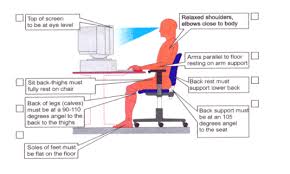 Sitting: Many secretaries spend a lot of time in the prolonged sitting position. This may cause severe stress on the back and neck. Measurements of the pressure generated inside the disc (cushions of the spine) during sitting shows that prolonged sitting is potentially the most dangerous position for the spine. Secretaries, Computer Operators, Drivers etc. are especially prone to back and neck problems. Sitting: Many secretaries spend a lot of time in the prolonged sitting position. This may cause severe stress on the back and neck. Measurements of the pressure generated inside the disc (cushions of the spine) during sitting shows that prolonged sitting is potentially the most dangerous position for the spine. Secretaries, Computer Operators, Drivers etc. are especially prone to back and neck problems.
The correct ergonomically designed chair is an essential part of your office furniture and should match your height. Also consider the relationship between your chair, your desk and the screen.
- Sedentary Lifestyle and Lack of Exercise: Most backaches are due to weakened and inflexible muscles, ligaments in the spine, primarily caused by lack of regular exercise, poor posture and excess weight.
Prolonged posture or repetitive activities is often associated with headaches and a tingling sensation of the fingers and toes. Avoid holding the same posture for extended periods or performing repetitive activities i.e. typing or using the mouse. This increases stresses on the discs, joints, muscles and on the nerves. Remember when working at a prolonged task, take frequent breaks, perform exercises, which are designed to relieve the stress from tensed or irritated structures.
When visiting your physiotherapists they will examine your spine and thereafter make a diagnosis. Based on the knowledge mentioned earlier, the physiotherapist will advise you how to prevent further injuries to ensure long-term results.
Treatments
A variety of treatment modalities are available for aches and pain of the back.
- Traction
Has a dramatic effect on acute (short term) spine pain associated with severe arm/leg pain and tingling sensation in the fingers or toes.
- Manual therapy
Manual therapy entails the use of highly qualified hands to locate abnormal tensions around joints, muscles and ligaments. This therapy is very "site-specific" and highly effective.
- Exercise
Your physiotherapist may create an exercise programme for you, which build up strength and increase joint flexibility. This is probably the most important treatment to ensure long-term relief. Exercises are necessary to build up muscle tone in particular in the tummy and back regions. These muscles are of vital importance as they support the spine.
- Craniosacral therapy
Treatment of pain by a gentle touch, which encourages the body to release restrictions and balances itself with its own energy rather than by imposed forceful interventional techniques.
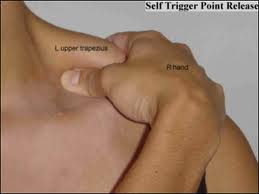 Trigger point therapy Trigger point therapy
Useful for long term back and neck pain. It can be applied with application of direct pressure via thumbs, elbow or acupuncture needle.
- Taping
Effective with pregnant women suffering from weak ligaments at the back and pelvis.
- Acupuncture
Used as an alternative healing treatment to relieve the physical and emotional stress of back pain.
- Self-help
Getting back on your feet. Always keep active, and build up your strength gradually. Moving around and doing normal activities will not harm your back - not doing them will reduce your chance of recovery. Obviously, this should be confirmed with your doctor. Set goals to build up fitness. Do not do more on good days and less on bad days.
Learn to relax. Muscles get tight and tense if you are stressed.
|

